
For companies that want to grow with clarity

The results you are missing may already be in your numbers.

GFACTOR helps owners, managers and teams see where money is slipping away and make better decisions. Data used well is not a report: it multiplies revenue, margin and productivity.

Instant result and, if it makes sense, you can already pick a time to talk.

You are
Your sector
The most common pains

Seven places where results usually slip away

For each pain: how it shows up, how much it may cost and what to do starting tomorrow. Use your own numbers in the calculators.

The pain
01 · Margin

The company sells well, but little is left

“Do I know, product by product, how much I really make on each sale?”

Owner: Revenue grows, profit doesn't follow, and nobody can say why.Manager: You hit the sales target and still get pressed on margin.Team: You calculate the average margin, but you know the average hides a lot.

In practice · ManufacturingRaw material costs go up, and the price list waits for next quarter.In practice · DistributionFreight eats the margin on small orders and nobody separates it.In practice · RetailThe busiest store is the one that contributes least after costs.In practice · ServicesOld contracts keep years-old prices while the team gets more expensive.
What it costs

A few margin points look small in a month, but they add up to a lot of money in a year.

Margin that may be slipping away per year
—

A simulation with your numbers. It helps size the issue; it is not a promise of gain.

What to do
  1. List your 20 best-selling items and calculate the real margin of each one, not the average.
  2. Compare the price you charge with this month's updated cost.
  3. Flag the items that sell a lot and contribute little. That's where to start.

With GFACTOR: GFACTOR builds the margin map by product, client and channel in days, not months.

I want to see my real margin →

First step: One-Decision Diagnostic, 7 to 10 days.

The pain
02 · Discounts

Discounting became the default way to sell

“Do I know how much discount is given, to whom, and whether it was really needed?”

Owner: You feel the company buys volume with its own margin.Manager: The team asks for discounts to hit targets and you have no clear criteria to say no.Team: You see the discount in the report, but you can't show how much it cost.

In practice · ManufacturingThe sales rep offers the maximum discount in the very first proposal.In practice · DistributionLarge and small clients get the same terms, regardless of volume or payment term.In practice · RetailThe promotion sells, but much of it would have sold anyway.In practice · ServicesThe renewal discount goes into the contract and never comes out.
What it costs

Every discount point beyond what's needed comes straight out of profit, without ever reaching cash.

Profit that may be given away per year
—

A simulation with your numbers. It helps size the issue; it is not a promise of gain.

What to do
  1. Split the last three months of sales by discount range and by salesperson.
  2. Check whether those who discount more really sell more, or just sell cheaper.
  3. Set limits by client type and decide who can approve above them.

With GFACTOR: GFACTOR creates pricing and discount rules your sales team understands and can follow.

I want criteria for discounts →

First step: One-Decision Diagnostic, 7 to 10 days.

The pain
03 · Inventory

There's money sitting on the shelf

“How much of my inventory hasn't moved in months, and what does it cost me?”

Owner: Cash is tight and the warehouse is full. The math doesn't add up.Manager: You buy so you don't run out, and end up with leftovers that don't sell.Team: You control inventory item by item, but nobody asks what it costs sitting still.

In practice · ManufacturingRaw material bought in bulk for a better price sits unused for months.In practice · DistributionSlow-moving items take up space that should belong to those that sell.In practice · RetailLast season's collection gets stuck and turns into a sale with negative margin.In practice · ServicesParts and supplies bought for contracts that were not renewed are still stored.
What it costs

Inventory that doesn't move ties up capital that could be earning, paying down debt or funding growth.

Yearly cost of keeping that inventory still
—

A simulation with your numbers. It excludes storage, losses and obsolescence, which add to this amount.

What to do
  1. List the items with no sales in the last 90 days and add up the value sitting still.
  2. Compare what you buy with what actually goes out, item by item.
  3. Decide what happens to each idle item: sell, return, transfer or stop buying.

With GFACTOR: GFACTOR shows where capital is stuck and helps rebalance purchasing and turnover.

I want to free up idle capital →

First step: One-Decision Diagnostic, 7 to 10 days.

Adding up the calculations you made: Move a calculator to see the total Find the real number in 7 to 10 days →

Four other common pains

04 · ClientsSome clients bill a lot and bring no profit“If I add up everything each client costs, are they all still worth it?”
The pain
04 · Clients

Some clients bill a lot and bring no profit

“If I add up everything each client costs, are they all still worth it?”

Owner: You celebrate the big client without knowing if they pay their way.Manager: You serve everyone the same way because you don't know who deserves more attention.Team: You know who buys the most, but you can't show who causes the most work.

In practice · ManufacturingThe client demands small batches, rush delivery and long payment terms at the same price.In practice · DistributionSplit orders and several deliveries a week to the same client.In practice · RetailClients who only buy on promotion and return items often.In practice · ServicesThe contract that takes the most from the team is the one that pays the least per hour.
What it costs

This cost doesn't show up on the invoice: it's spread across freight, payment terms, service and rework.

What to do
  1. Pick your 10 largest clients and note payment terms, discount, freight and service effort for each.
  2. Compare what each one bills with what it costs to serve them.
  3. For those who don't pay their way, review the commercial terms before thinking about losing the client.

With GFACTOR: GFACTOR measures the real result per client and helps adjust terms without losing the relationship.

I want to know which clients are profitable →

First step: One-Decision Diagnostic, 7 to 10 days.

05 · PortfolioNobody knows which product should leave the line“Does every product in my portfolio have a clear role, or is it there out of habit?”
The pain
05 · Portfolio

Nobody knows which product should leave the line

“Does every product in my portfolio have a clear role, or is it there out of habit?”

Owner: The line grows every year, so does complexity, and profit doesn't follow.Manager: You know there are too many products, but you lack the basis to defend a cut.Team: You register, price and track items that almost nobody buys.

In practice · ManufacturingPackaging variations that require stopping the line to sell very little.In practice · DistributionItems kept for a single client who doesn't even buy regularly.In practice · RetailA best-selling product that only exists to attract traffic and leaves no margin.In practice · ServicesPackages created for a specific case that became a permanent part of the offer.
What it costs

Products without a role use up space, inventory, team attention and production time that could go to what delivers results.

What to do
  1. Give each product a role: generates margin, attracts clients, completes the sale, or none of these.
  2. Cross sales volume with contribution to find what sells a lot and leaves little.
  3. Start by testing the exit of the lowest-risk items without a role.

With GFACTOR: GFACTOR organizes the portfolio by role and contribution so cutting becomes a decision, not a bet.

I want clarity on my portfolio →

First step: One-Decision Diagnostic, 7 to 10 days.

06 · Trust in the numbersThree reports, three truths“When the number reaches the meeting, does anyone trust it right away?”
The pain
06 · Trust in the numbers

Three reports, three truths

“When the number reaches the meeting, does anyone trust it right away?”

Owner: You ask something simple and get three different answers, days later.Manager: The meeting turns into a debate about which number is right, not about what to do.Team: You spend the week merging spreadsheets and there's barely time left to analyze.

In practice · ManufacturingProduction, sales and finance measure the month's sales in different ways.In practice · DistributionThe system report doesn't match the finance close.In practice · RetailEach store sends its spreadsheet in a different format and someone consolidates it all by hand.In practice · ServicesLogged hours don't match what was billed.
What it costs

The cost is in the hours lost building numbers and in decisions postponed because nobody trusts them.

What to do
  1. Pick the five numbers that weigh most on your decisions and write down how each one is calculated.
  2. Define a single source and one owner for each of them.
  3. Count how many hours a month the team spends building reports. That's the first possible gain.

With GFACTOR: GFACTOR organizes the numbers that matter so the meeting is used to decide.

I want a number everyone trusts →

First step: One-Decision Diagnostic, 7 to 10 days.

07 · People and dataThe data is there, but nobody knows how to use it“When a question comes up, can someone on the team answer it alone with the numbers?”
The pain
07 · People and data

The data is there, but nobody knows how to use it

“When a question comes up, can someone on the team answer it alone with the numbers?”

Owner: You invested in systems and reports, but decisions still come from gut feeling.Manager: Every new question becomes a request to the same person, and the answer takes a while.Team: You have access to the numbers, but nobody showed you what to look for in them.

In practice · ManufacturingThe ERP has cost per product, but only one person knows how to pull the report.In practice · DistributionThe salesperson sees the client's revenue, but can't read the margin it leaves.In practice · RetailThe store manager gets the sales dashboard and doesn't know what to do with it.In practice · ServicesThe project lead has the logged hours, but doesn't know how to compare them with the budget.
What it costs

The cost is in system investments that never become decisions, in depending on one or two people and in the questions that never get asked.

What to do
  1. List the three questions the team asks most and who can answer them today.
  2. Pick one and teach two more people to answer it with the data that already exists.
  3. Set a fixed time each week to read the number together, before deciding.

With GFACTOR: GFACTOR trains people in what to ask the numbers and how to read and maintain the answers, according to each role: owner, manager or team.

I want to prepare my team →

First step: One-Decision Diagnostic, 7 to 10 days.

Quem está por trás
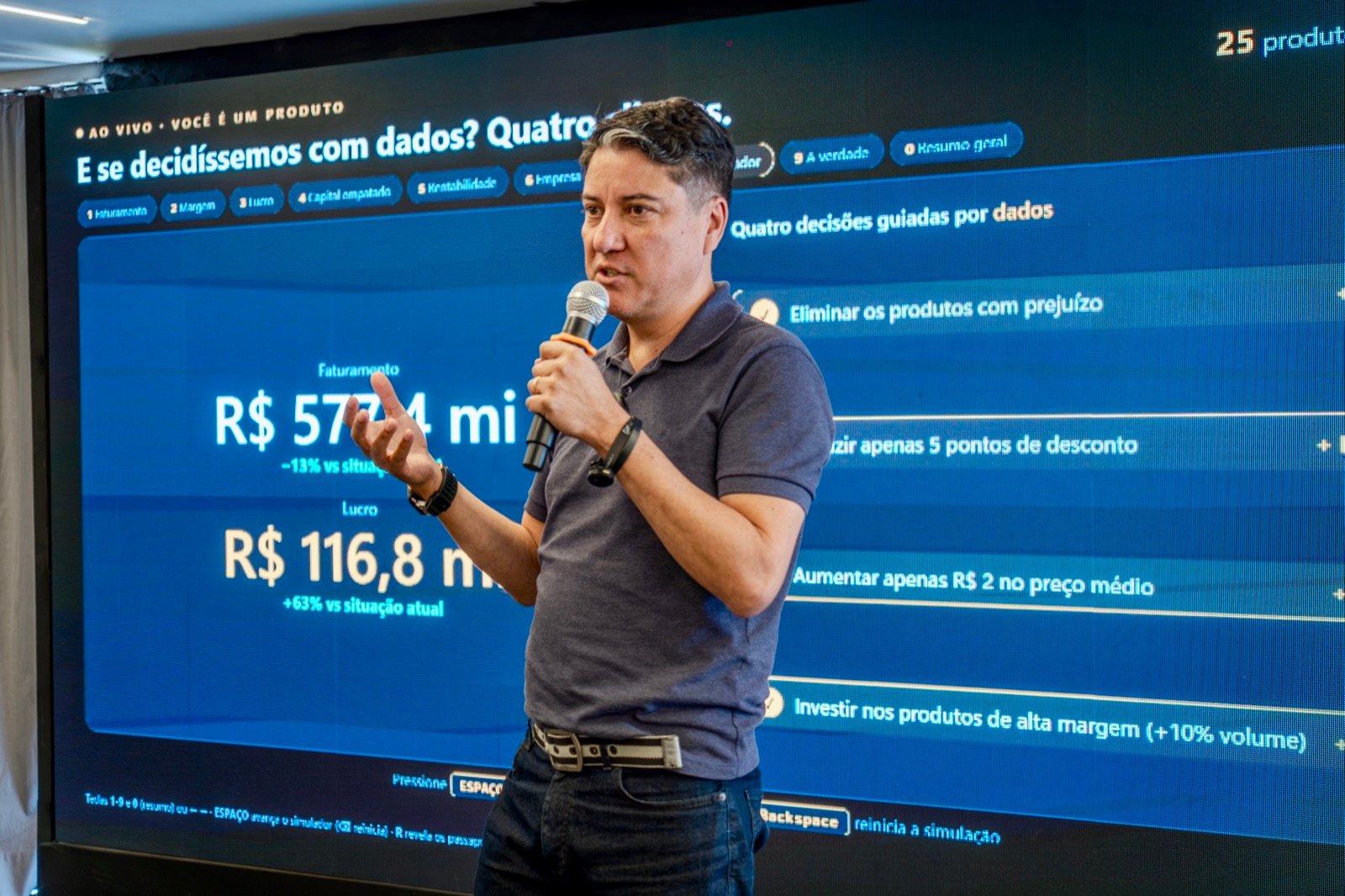
Luis Gama, founder of GFACTOR
“Data only has value when it changes a decision. The rest is a report.”

Luis Gama, founder of GFACTOR. Time at Natura, Avon and CLM, working in Brazil, Latin America and at the corporate headquarters in the US. Today GFACTOR brings this practice to companies of all sizes and sectors, focused on revenue, margin and productivity.

Luis Gama · Founder of GFACTOR
How to start

Start with a proof. Move forward when results show up.

Three stages of the same journey. It all starts with one decision, answered with your own data.

Step 1

One-Decision Diagnostic

7 to 10 days

The decision that weighs most today, answered with your own numbers. The first proof.

  • You choose the decision to start with
  • Answer, value and what to do, on one page
  • Your team learns to keep the number alive
See how it works →
Next step

Which of these pains do you want to look at first?

No obligation. You get the available days and times by e-mail and choose the one that suits you best.Prefer to start on your own? Take the free Assessment and see your result instantly.